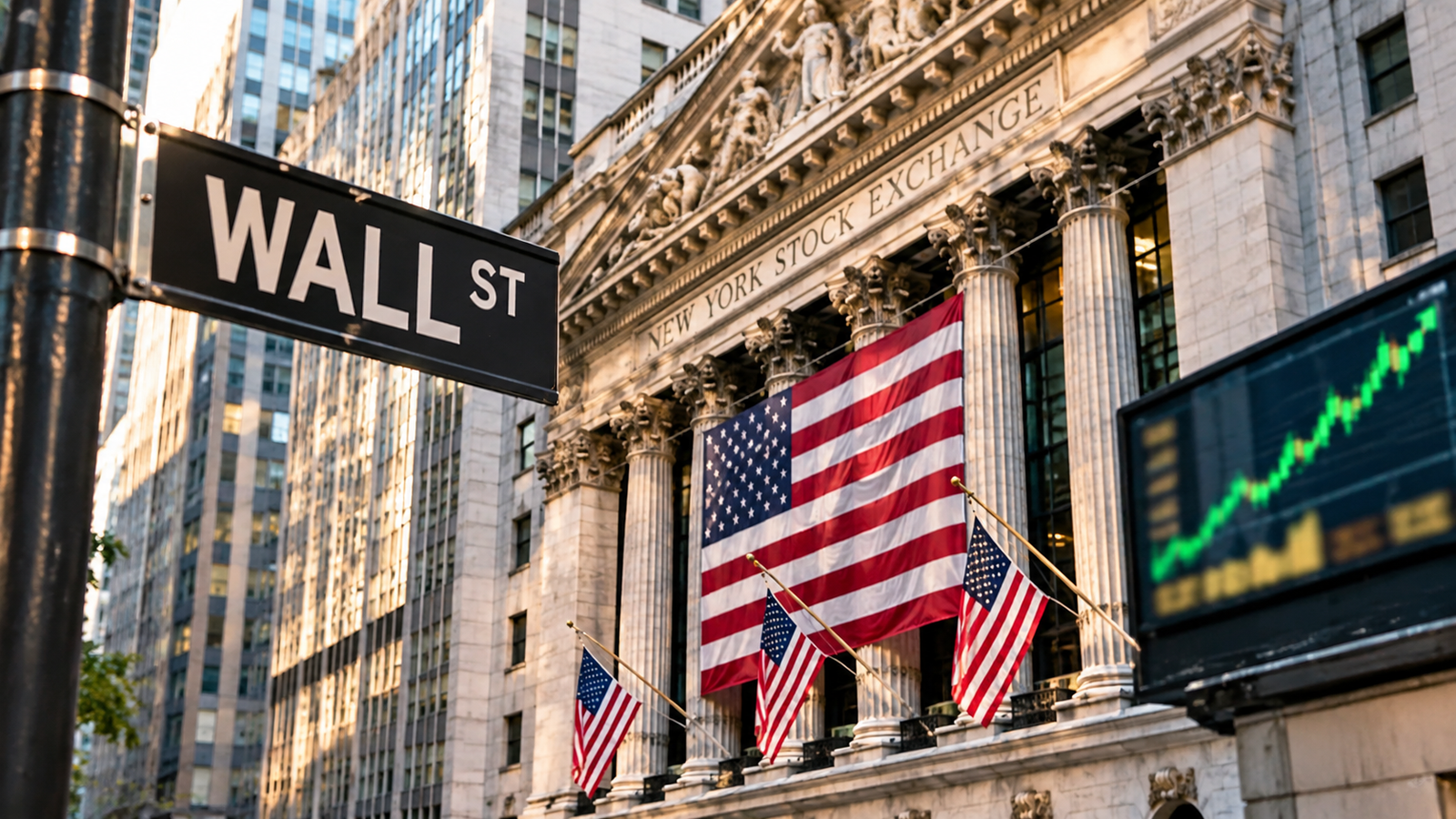
The stock market weekly recap for November 9–13, 2026, highlights a strong rebound on Wall Street after several weeks of volatility. The S&P 500 rose 2.5%, the Nasdaq Composite gained 2.3%, and the Dow Jones Industrial Average advanced 2.1%, even as technology stocks faced renewed selling pressure toward the end of the week.
However, Wall Street’s recovery did not eliminate the challenges facing investors. Persistent inflation concerns, uncertainty surrounding Federal Reserve interest rate decisions, and sharp movements in major technology stocks continued to influence market sentiment.
For individual investors, the key question is not simply whether stocks finished the week higher, but what these developments could mean for their portfolios, investment risks, and long-term financial decisions.
In this stock market weekly recap, we examine the major market movements, the economic forces behind them, and the lessons everyday investors can take into the coming week.
Stock Market Weekly Recap: How Did the Major Indexes Perform?
| Stock Market Index | Weekly Change | Nov. 13 Close |
| S&P 500 | +2.5% | 7,561.67 |
| Nasdaq Composite | +2.3% | 25,136.27 |
| Dow Jones Industrial Average | +2.1% | 52,347.55 |
| Russell 2000 | +1.3% | 2,790.49 |
Source: Associated Press — U.S. Stock Market Closing Data, November 13, 2026.
The major U.S. stock indexes finished the week of November 9–13, 2026, with positive returns, despite renewed selling pressure in technology shares on Friday. The S&P 500 gained 2.5%, while the technology-heavy Nasdaq Composite advanced 2.3%. The Dow Jones Industrial Average rose 2.1%, and the Russell 2000, which tracks smaller U.S. companies, increased 1.3%.
These gains offered some relief to investors, but the uneven trading throughout the week highlighted the importance of monitoring market risks rather than focusing only on short-term returns.
What Drove the Stock Market This Week?
1. Inflation Remains a Major Concern for Investors
Inflation remained one of the most important factors influencing Wall Street during the week of November 9–13, 2026. New economic reports showed that price pressures continued to affect American households and businesses, raising concerns about how long interest rates might remain elevated.
October’s Producer Price Index (PPI) showed that wholesale prices increased 6.5% over the previous 12 months, the largest annual increase in four years. Although the monthly increase was more moderate than economists had expected, persistent inflation pressures reinforced concerns that the Federal Reserve could continue raising interest rates.
Source: U.S. Bureau of Labor Statistics — Producer Price Indexes, October 2026.
For everyday Americans, higher interest rates can mean more expensive mortgages, credit cards, and other forms of borrowing. For investors, they can also affect stock valuations, particularly among companies whose market prices depend heavily on expectations of future earnings.
This helps explain why a positive week for the major stock indexes did not necessarily signal the end of market uncertainty. Investors still need to consider how inflation and monetary policy could influence their portfolios in the months ahead.
2. Technology Stocks and Market Volatility
Technology stocks played a major role in the market’s volatility during the week of November 9–13, 2026. Although the Nasdaq Composite gained 2.3% for the week, it fell 0.9% on Friday as selling pressure returned to major technology companies.
Nvidia was a particular focus for investors following the resignation of CEO Jensen Huang. Uncertainty surrounding the company’s leadership weighed on its shares and contributed to concerns across the artificial intelligence and semiconductor industries.
Source: NVIDIA Newsroom — NVIDIA Announces CEO Transition, November 12, 2026.
These developments illustrate how quickly investor sentiment can change, even when the broader stock market is recovering. Companies associated with artificial intelligence have attracted significant investor interest, but high growth expectations can also make their share prices sensitive to unexpected developments.
For individual investors, the lesson is straightforward: owning several technology stocks does not necessarily provide sufficient diversification. When companies are exposed to similar economic conditions and industry risks, their share prices may decline together.
A diversified portfolio that considers different sectors, asset classes, and personal risk tolerance can help investors avoid excessive dependence on a single industry. Diversification does not eliminate losses, but it can reduce concentration risk.
3. Treasury Yields and Federal Reserve Uncertainty
U.S. Treasury yields climbed during the week of November 9–13, 2026, as investors reassessed the outlook for inflation and Federal Reserve interest rate decisions.
The yield on the benchmark 10-year U.S. Treasury note reached approximately 5.15% on Friday, compared with 4.86% at the end of the previous week. This increase reflected growing concerns that inflation could keep borrowing costs elevated for longer than investors previously anticipated.
Source: U.S. Department of the Treasury — Daily Treasury Par Yield Curve Rates, November 2026.
Treasury yields matter because they influence borrowing costs throughout the U.S. economy. Higher yields can put upward pressure on mortgage rates, increase financing costs for businesses, and make bonds more attractive relative to certain stocks.
For stock market investors, rising yields can also create challenges for companies with high valuations, particularly when much of their expected profitability lies several years in the future.
However, higher bond yields do not affect every investor in the same way. Investors purchasing newly issued bonds may benefit from more attractive interest rates, while existing fixed-rate bonds generally lose market value when yields rise.
Understanding the relationship between interest rates, bond prices, and stock valuations can help individual investors make more informed decisions without reacting impulsively to daily market movements.
What Does This Mean for Individual Investors?
A strong week on Wall Street can be encouraging, but short-term market gains should not be confused with long-term financial security.
For individual investors, the events of November 9–13 offer an opportunity to review investment strategies, evaluate portfolio risks, and consider how changing economic conditions could affect their financial goals.
Rather than attempting to predict every market movement, investors can focus on a few practical principles that remain relevant during both market rallies and periods of uncertainty.
1. Review Your Portfolio Diversification
One of the most important lessons from this week’s market movements is the value of diversification.
When technology stocks experience sharp price swings, investors with portfolios heavily concentrated in a few companies or a single industry may face greater volatility.
Diversification involves spreading investments across different companies, sectors, and asset classes, such as stocks, bonds, and cash equivalents.
For example, an investor who owns several technology companies may believe their portfolio is diversified. However, those companies can still be exposed to similar economic risks, including rising interest rates and changes in growth expectations.
A well-diversified portfolio cannot guarantee profits or prevent losses, but it can help reduce the impact of poor performance in any single investment or sector.
Key takeaway: Review whether your investments are appropriately diversified for your financial goals, time horizon, and tolerance for risk.
If you’re building your financial knowledge, explore our Personal Finance for Beginners: A Simple Guide to learn more about managing money and developing healthy financial habits.
2. Avoid Emotional Investment Decisions
Market volatility can trigger strong emotional reactions, especially when stock prices rise or fall sharply within a short period.
During market rallies, some investors may feel pressured to buy stocks because they fear missing potential gains. During market declines, others may sell investments out of fear, potentially locking in losses.
Both reactions can interfere with a carefully planned long-term investment strategy.
Instead of making decisions based on daily headlines, investors should evaluate whether market developments have fundamentally changed their financial goals, investment time horizon, or ability to tolerate risk.
Maintaining an emergency fund and avoiding the use of money needed for short-term expenses in volatile investments can also help reduce the pressure to make emotional decisions.
Key takeaway: A disciplined investment strategy should be guided by financial objectives and risk tolerance, not by fear or excitement surrounding short-term market movements.
3. Understand How Interest Rates Affect Your Investments
Interest rates influence nearly every part of the financial markets, from stock valuations and bond prices to savings accounts and borrowing costs.
When interest rates rise, businesses may face higher financing expenses, potentially reducing profitability. Companies that depend heavily on borrowing or expectations of future growth can be particularly sensitive to these changes.
For bond investors, rising market interest rates generally cause the prices of existing fixed-rate bonds to decline. However, newly issued bonds may offer more attractive yields.
Higher interest rates can also benefit savers by increasing the returns available on certain savings accounts, certificates of deposit (CDs), and other interest-bearing products.
Rather than assuming that higher interest rates are always good or bad for investors, it is important to understand how different assets respond to changing economic conditions.
Key takeaway: Consider how your portfolio could perform under different interest rate scenarios, and make sure your investment choices remain consistent with your financial goals and risk tolerance.
4. Stay Focused on Your Long-Term Investment Goals
A single week of stock market gains or losses rarely tells the full story of an investor’s long-term financial progress.
While economic reports, Federal Reserve decisions, and corporate developments can influence short-term market performance, long-term investment results depend on a broader combination of factors.
Investors should regularly review their financial objectives, investment time horizons, and portfolio allocations rather than changing strategies in response to every market headline.
For example, someone investing for retirement 20 years from now may have different priorities from an individual planning to purchase a home within the next two years.
A long-term perspective does not mean ignoring risks. Instead, it means making investment decisions based on a clear financial plan while adjusting that plan when personal circumstances or financial needs change.
Key takeaway: Keep your investment strategy aligned with your goals and time horizon, and avoid allowing short-term market volatility to dictate long-term financial decisions.
5. Protect Your Finances Before Taking Investment Risks
Stock market opportunities can be attractive, but protecting your financial stability should remain a priority.
Before investing money in volatile assets, individuals should consider whether they have sufficient emergency savings to cover unexpected expenses, such as medical bills, car repairs, or temporary unemployment.
An emergency fund can help reduce the need to sell investments during market downturns simply to cover everyday expenses.
Investors should also evaluate high-interest debt, particularly credit card balances, because borrowing costs can sometimes outweigh the potential benefits of taking additional investment risks.
Another important consideration is liquidity. Money needed for essential expenses or near-term financial goals may be better suited to accessible, lower-risk financial products rather than investments subject to significant price fluctuations.
Building financial resilience does not require avoiding the stock market. It means understanding how much risk you can reasonably afford to take without compromising your financial security.
Key takeaway: Establish a solid financial foundation, maintain appropriate emergency savings, and invest only at a level of risk that fits your personal circumstances.
Building an emergency fund often starts with small changes in everyday spending. For practical ideas, read our guide, How to Save Money on a Tight Budget: 15 Practical Tips, and discover ways to strengthen your financial foundation.
Stock Market Weekly Recap: Final Thoughts for Investors
The week of November 9–13, 2026, demonstrated how quickly financial markets can shift between optimism and uncertainty.
Although major U.S. stock indexes finished the week with gains, concerns surrounding inflation, interest rates, and technology stock valuations reminded investors that market recoveries do not eliminate financial risks.
For individual investors, the most valuable lesson is not to predict the next market rally or correction, but to develop a financial strategy that can withstand changing economic conditions.
Diversification, disciplined decision-making, appropriate emergency savings, and a clear understanding of personal risk tolerance remain essential components of a responsible investment approach.
As Wall Street enters another trading week, investors should continue monitoring economic developments while keeping their financial decisions aligned with their long-term objectives.
At AtMarketPrice, our goal is to help everyday investors understand financial markets, evaluate risks, and make more informed decisions about their money.